self-regulating cable system and costs about $0.27 per hour to run. The cost varies based on the size of the roof, cable type, system controls, and project specifications.
Since winter weather can lead to significant roof and gutter damage, a heated cable system melts snow and ice before it has the chance to accumulate. This reduces ice dam formation and keeps drainage paths open along roof edges, gutters, and downspouts, so meltwater can drain away.
Understanding the materials, installation, and operating costs can help you determine what kind of roof and gutter heating system is the right winter solution for your property. In this article, we’ll cover:
- Why ice dams are dangerous
- What a roof and gutter heating cable system is
- The differences between insulation and a heated system
- The installation costs of a heated system
- The running cost of a heated system
- Frequently asked questions about roof and gutter heating systems
Why are ice dams dangerous for roofs and gutters?
Ice dams are dangerous because they prevent the proper drainage of snowmelt from the top of the house, increasing the likelihood of extensive water damage to the roof, gutters, and interior of the home, which can result in expensive emergency repairs.
When snow and ice melt and refreeze along areas of a roof or gutter, it creates a ridge of ice, which can trap newly melted and refreezing snowmelt behind it. According to the National Roofing Contractors Association (NRCA), snow accumulation, freezing temperatures, insulation levels, ventilation, and air sealing can all contribute to ice dam formation. Ice dams can form even on well-built roofs under the right weather conditions.
When unaccounted for, ice dams place stress on roofs and gutters, which can lead to the following issues:
| Potential issue | Why it matters |
| Roof leaks | Trapped water may back up beneath roofing materials and enter the home. |
| Gutter damage | Heavy ice accumulation can place additional weight and strain on gutters and downspouts. |
| Roof deterioration | Repeated freeze-thaw cycles and prolonged moisture exposure can contribute to roof damage over time. |
| Safety hazards | Falling ice and large icicles can create hazards for people and property below. |
| Increased maintenance | Ice dams often require manual snow and ice removal to restore proper drainage. |
What is a roof and gutter heating cable system?
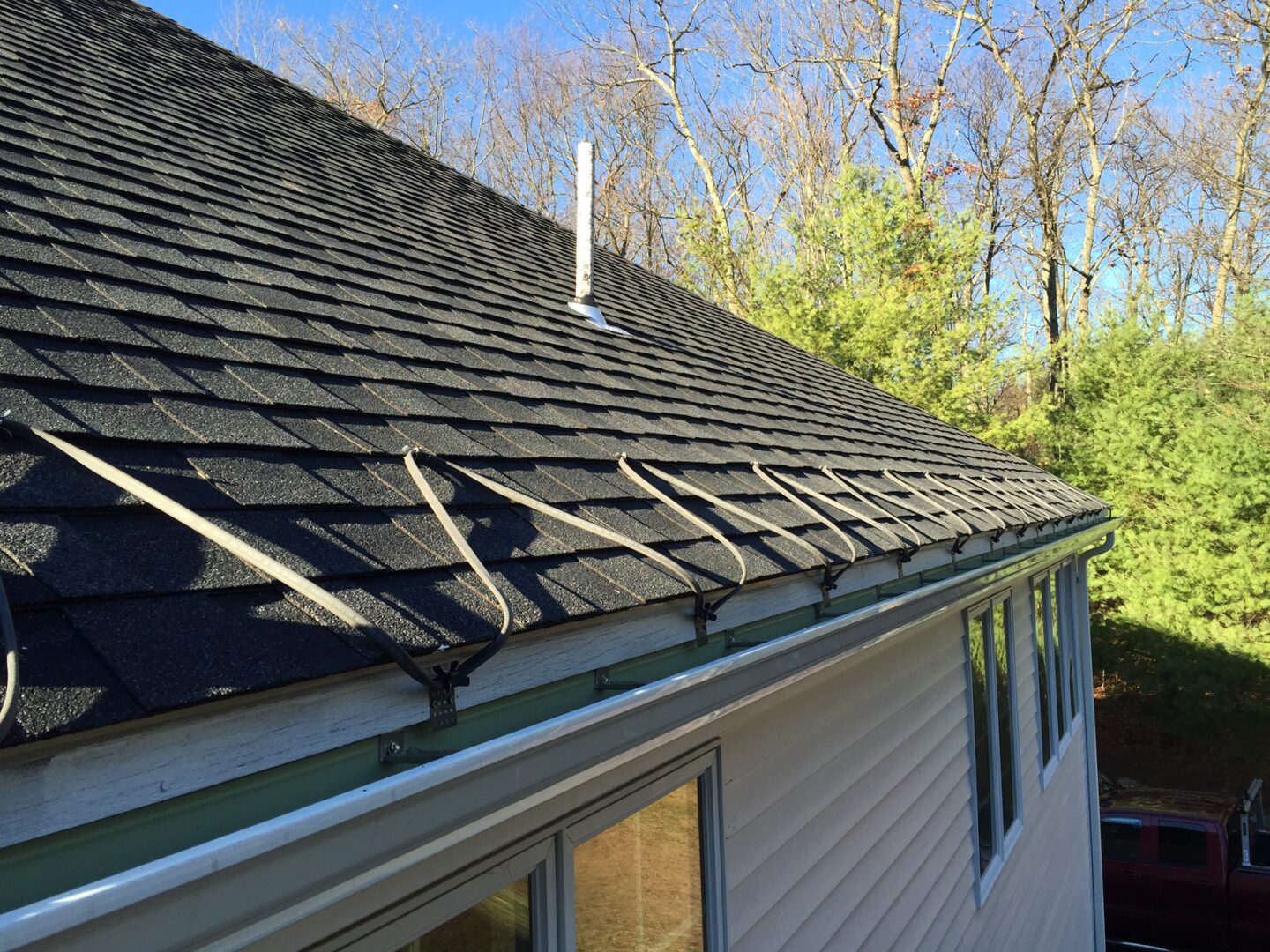
A roof and gutter heating cable system is a snow-melting solution that consists of heating cables, sensors, and controllers that melt snow and ice, keeping drainage paths clear so meltwater can’t refreeze into ice dams.
Since snow and ice blockages occur when snowmelt can’t properly drain from the roof and gutters, a heating cable system reduces the risk that ice dams pose to a home’s structure and safety.
Heating Cable
The heating cable works by generating heat along the areas of the roof where ice dams form most often. Rather than heating the entire roof, the heating cables are placed in high-priority areas that target where snow and ice buildup are most likely to occur. This means that cables are most often placed on roof edges, eaves, gutters, downspouts, valleys, and drains.
What’s the difference between self-regulating and constant wattage heating cables?
There are two types of heating cables to choose from – Self-Regulating and Constant Wattage. Self-Regulating Cables automatically adjust their heat output based on the temperature, emitting more heat in colder areas and less in warmer areas. Constant Wattage Cables, on the other hand, deliver the same level of heat output along the entire cable, with no change in output depending on the surrounding temperatures.
Sensor
Roof deicing sensors monitor climate conditions to determine when the system should be activated. Sensors, such as the PRO-R Snow Sensor, can detect temperature, moisture, and snowfall, which they then communicate to the controller. The sensor readings ensure that the system is only turned on when necessary, improving operational efficiency and reducing unnecessary runtime.
Controller
Roof deicing controllers read the climate conditions and manage power delivery to the heating cables. Information from the sensor is sent to the controller, which then automatically determines if the system should be turned on or off. Advanced controllers, such as the SNOPRO, may include features such as remote monitoring and scheduling capabilities, helping optimize system performance and energy consumption.
What is the difference between roof and gutter heating cables vs. insulation and ventilation?
The difference between roof and gutter heating cables and insulation and ventilation is that insulation and ventilation help reduce the conditions that cause ice dams, whereas roof and gutter heating cables create drainage paths open when snow and ice accumulate.
Under the roof, attic insulation, air sealing, and roof ventilation are usually among the first preventative measures against ice dam formation. By limiting heat loss from the home and helping maintain consistent roof temperatures, the likelihood of snow melting and refreezing at the roof’s edge can be reduced.
However, insulation and ventilation can’t always prevent ice dams, especially under heavy snowfall and freezing temperatures. For this reason, roof and gutter heating cables serve as an additional, effective layer of ice dam control and prevention.
Here’s how each solution helps to prevent ice dams:
- Air sealing: Reduces heat loss from the home into the attic
- Insulation: Helps maintain more consistent temperatures on the underside of the roof
- Ventilation: Regulates attic temperature and moisture levels
- Roof and gutter heating cables: Create drainage paths for melting snow and ice on the roof’s surface
For the best protection, combine insulation and ventilation inside the attic with heating cables on the roof’s exterior.
What are the cost factors of a roof and gutter heating system installation?
The total cost of a roof and gutter heating system depends on several factors, such as roof size, roof design, accessibility, cable type, and controls.
| Factor | Impact on Cost |
| Roof size | Larger roofs require more cable. |
| Roof design | Valleys, dormers, and multiple roof sections increase material needs. |
| Accessibility | Steep or multi-story roofs typically increase labor costs. |
| Cable type | Self-Regulating Cables usually cost more than Constant Wattage Cables. |
| Controls | Automated sensors and smart controls increase system cost. |
As every roof and gutter setup is different, the total cost of a roof and gutter heating system can vary significantly. These factors all influence the amount of material, labor, and electrical work that is required.
What are the costs of a roof and gutter heating system installation?
The material cost of a roof and gutter heating system for an average single-family home is around $1,700-$5,750 and will vary depending on the materials used, roof size and design, and system controls.
| Item | Average Purchase Cost | Key Takeaway |
| Self-Regulating Roof Heating Cable | $6-$18 per linear ft. | Automatically adjusts heat output based on surrounding conditions, helping improve energy efficiency. |
| Constant Wattage Roof Heating Cable | $1-$5 per linear ft. | Delivers consistent heat output whenever powered. |
| Roof Deicing Controller | $1,000-$5,500 | Controls system operation and distributes power to heating cables. |
| Snow & Ice Detection Sensors | $1,300-$1,750 | Can help reduce energy consumption by activating the system only when required. |
| Roof Installation Accessories | $30-$150 | Includes clips & other components required for secure installation. |
| Roofing Contractors | $60-$120/hour | Labor costs are influenced by roof size, accessibility, & local labor rates. |
| Electrical Work | $50-$130/hour | Qualified electrician recommended to install all electrical connections. |
The typical cost of materials depends on cable type, controller type, and roof design. Installation costs typically depend on cable layout, gutter length, number of downspouts, and electrical work being done.
For example, an average single-family home installing self-regulating roof heating cable on 150 feet of roof edge could expect the material cost to be $1,800-$6,200, with total project costs varying based on controls, accessories, labor, and electrical requirements.
If you would like assistance with a roof and gutter heating project, contact us for a free quote!
What is the running cost for a roof and gutter heating system?
Operating costs depend on variables such as local energy prices, cable length, weather conditions, and hours of operation, and can be calculated using the formula: cable length × watts per foot ÷ 1,000 × electricity rate = hourly cost.
Using the national average electricity cost of $0.182 per kWh (U.S. Energy Information Administration 2026 forecast) and 5 watts per foot of heating cable output, this chart estimates the hourly operating cost of roof and gutter heating systems in various sizes:
| Roof Edge | Est. cable length | Power Draw | Hourly cost ($0.182/kWh avg) |
| Small, 100 ft | 200 ft | 1.0 kW | ~$0.18 |
| Medium, 150 ft | 300 ft | 1.5 kW | ~$0.27 |
| Large, 200 ft | 400 ft | 2.0 kW | ~$0.36 |
| Extra Large, 250 ft | 500 ft | 2.5 kW | ~$0.46 |
Running a system for a medium-sized home for 8 hours will cost approximately $2.16. Note that self-regulating cables draw less power in milder conditions, so the power draw shown in the chart may vary.
Does a roof and gutter heating system require maintenance?
Yes, roof heating cables should be inspected annually to ensure that the heating system continues running correctly.
During an inspection, contractors check the condition of the cable for wear and tear, power connections, voltage readings, and sensors and controllers. These inspections can cost on average $200-$800 a year, depending on local labor rates. Maintaining regular system inspections helps reduce the likelihood of costly repairs down the line as well as extend the life of the system.
Frequently Asked Questions
Do roof heating cables need to heat the entire roof?
No, roof deicing cables should be placed in locations of the greatest priority for snowmelt drainage, such as eaves, gutters, valleys, and downspouts.
Do I need heating cables in my gutters and downspouts?
Yes. Heating only the roof edge can leave meltwater with nowhere to go, causing it to refreeze in cold gutters and downspouts. A complete system runs cable through gutters and downspouts to create a continuous drainage path off the roof.
Are self-regulating cables worth the extra cost?
For many homeowners, yes. Self-regulating cables adjust their heat output along their length, producing more heat in colder spots and less in milder ones, which can lower energy use over time. Constant wattage cables cost less upfront but draw the same power whenever they’re on.
How much electricity do roof heating cables use?
A typical system draws about 5 watts per foot of cable, so a medium-sized home with 300 feet of cable uses about 1.5 kW, similar to a portable space heater. At the national average rate of 18.2 cents per kWh, that’s about $0.27 per hour. A snow sensor and controller reduce costs further by running the system only when needed.
Can I install roof heating cables myself?
Some plug-in cable kits are designed for DIY installation, but hardwired systems with controllers and sensors should be installed by a qualified electrician. The National Electrical Code requires ground-fault protection for de-icing equipment, and a professional can make sure the system meets local code.
Find out the cost of your roof and gutter heating system project
Roof heating cables are an effective solution for helping prevent ice dams, improve roof drainage, and protect gutters and roofing materials from winter weather. Evaluating the right combination of heating cables, controls, and preventative measures can help homeowners select the most effective roof deicing system for their property.
If you’re considering a roof and gutter heating installation, contact us for a free roof and gutter heating quote. For additional guidance, explore our YouTube channel for installation videos, product demonstrations, and expert advice.