When considering different heating options, it’s important to think about how a system generates heat as well as how the system functions in everyday use. Underfloor radiant heating systems and convection heaters operate differently, and those differences can impact the overall comfort, efficiency, and optimization of your heating system.
In this article, we’ll go over:
- Ideal Warmup radiant heating system solutions
- How radiant heating systems and convection heaters operate
- The key differences between both systems
- When and where each system is best utilized
How do radiant and convection heaters work?
Radiant and convection heaters generate heat through different means. Before you can determine the context in which these systems can be applied, you must first understand their functionalities.
Convection heaters
Convection heaters are typically placed along a wall or on the floor and operate by warming the air in a room. It first heats the air closest to the heater, and as that air becomes warmer, it rises and begins to circulate throughout the room. Cooler air then occupies the space left by the warmer air. This process repeats, ultimately heating all the air within a space until the intended temperature is reached.

Radiant heaters
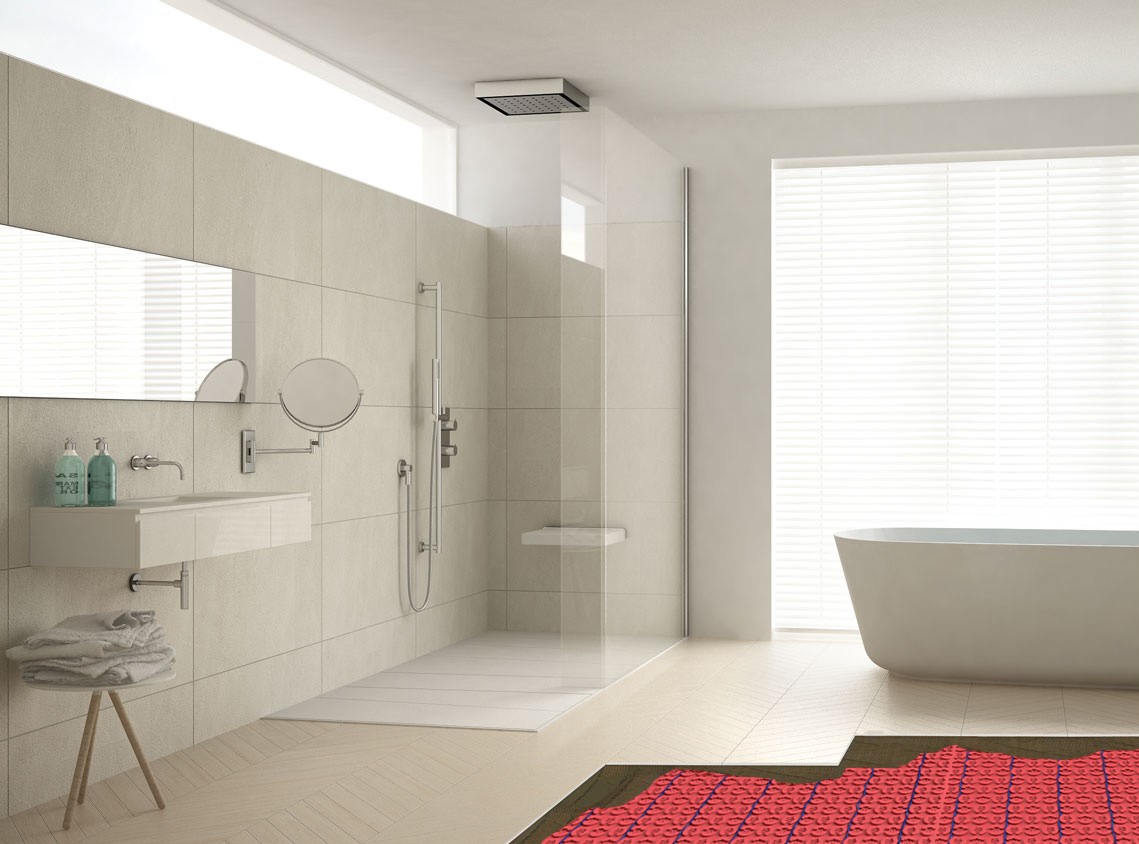
Radiant heaters are installed under the flooring, allowing them to send heat directly upwards. Surfaces are heated directly, and once heated, continue to radiate heat themselves. As heating begins at the lowest point in a room, the intended temperature can be felt as the heat rises. The air does not need to be repeatedly heated and circulated – rather, heat is sent to the coldest parts of a room first and continues to heat the surrounding area.
Key differences between convection and radiant heating
The way in which heat moves throughout a space affects many things, such as heat up times and heat distribution. Additionally, the variables within a given space – such as doorways, windows, and furniture – also impact heat retention and heat loss. This is why it’s important to consider how each system may be affected by these variables.
Temperature control
Convection heating is streamlined and provides a steady flow of heat. That being said, heat moves upwards, meaning that the majority of the heat may rise and remain at ceiling level. As the warm air moves, its heat disperses, making it difficult for those occupying the room to feel warm unless they are standing directly next to the heat source. This can result in uneven air temperatures, particularly in more open spaces or rooms with drafts, windows, or doors.
Radiant heat delivers consistent warm comfort. Since heat moves to where it’s coldest, underfloor radiant heating eliminates the coldest areas first, then warms from the floor up. By directly heating air and objects in this way, heat successfully reaches and efficiently maintains the ideal heating level, which is the average height of the human core (i.e. heart level).
Heat output & energy efficiency
Convection heaters output heat that warms the air and then circulates throughout a given space. That being said, as warm air circulates, the heat disperses, thus requiring more energy to maintain the desired temperature and heat new, cooler pockets of air. Inconsistent air temperatures can also cause inaccurate thermostat readings, which can increase a system’s energy consumption.
Radiant heating systems, on the other hand, evenly distribute heat at a consistent temperature, ultimately eliminating cold spots on the floor and effectively maintaining a comfortable temperature at the human core level. Temperature uniformity provides more accurate thermostat readings, resulting in less wasted energy use. Since radiant heaters directly warm objects instead of air, the consistent heat output means that spaces can reach comfortable levels at lower temperatures for shorter amounts of time and less energy use.
Best use cases for each heater
Due to the method of warming and then circulating air, convection heaters work particularly well in enclosed areas. For the system to work most efficiently, air should not be able to escape, the area should be well insulated, and there should be no drafts – all of which would allow the air to remain at a consistent temperature and allow the warm air to be felt.
As a result of their direct heating, radiant heaters are ideal for use throughout an entire home, within open spaces, and in individual rooms. No matter what the purpose, radiant heaters deliver the desired feeling of warmth while achieving it with lower temperatures, reduced heat loss, and increased energy-efficiency. When paired with smart thermostats, radiant heating systems can be tailored to suit user needs while optimizing energy output and reducing running costs by up to 35% more than traditional heating systems.
Ideal Warmup radiant heating system for your home
When integrating a radiant heating system into your home, it’s important to choose the right heating system, thermostat, and insulation. The best system combination involves using Warmup’s DCM-PRO paired with the 7iE Smart Matter Thermostat and Ultralight Insulation Boards.
The DCM-PRO System delivers heat from the floor up, creating even and constant warmth where it is felt most, successfully reducing cold spots and heat waste and providing temperature consistency where convection heaters can’t. Additionally, the DCM-PRO System’s uncoupling membrane provides a protective layer between the floor finishing and the subfloor, preventing tile and stone from cracking as a result of movement in the subfloor.
When paired with a Smart Thermostat, such as the 7iE Smart Matter Thermostat, the system delivers tailored, energy-efficient heating management. Features such as smart home compatibility, remote app-based management, and automatic heating adjustments without programming, the 7iE maintains comfort without unnecessary energy use. This level of precise system control provides reliable comfort, which is harder to receive from convection heaters that often rely on less accurate room air readings.
To solidify heating system efficiency, Ultralight Insulation Boards effectively reduce heat loss and help the floor heat up faster. Ultralight facilitates heat spread and increases heat retention by directing heat into the room instead of letting it sink into the subfloor.
Check out what Warmup has to offer
If you’re interested in incorporating a radiant heating system into your home, use our quoting tool to help you select the best system for your needs. You can purchase our radiant floor heaters at one of our many retail partners.
For installation tips, check out our YouTube channel. For any questions or inquiries, please do not hesitate to reach out to our Customer Experience Team at ca@warmup.com or (888) 927-6333.