When going away, one of the most important questions (and sometimes the most difficult to answer) that we ask ourselves is “what temperature should I set my Warmup thermostat at?”
This is a tricky line to balance – for instance, when the outside temperature drops below freezing and a home is too cold, it could be susceptible to pipes freezing or bursting, which can cause significant and expensive damages. This is easiest to maintain by increasing the temperature inside. That being said, increasing the temperature too much can lead to costly heating expenses, especially during the winter months.
In this article, we’ll explore various heating solutions, such as Warmup underfloor heating, and additional strategies that can help you answer this question. We’ll go over:
- What factors to consider when setting your home’s temperature
- What the recommended seasonal temperature ranges are
- How you can more effectively maintain a comfortable temperature in your home
- Why radiant underfloor heating provides a well-balanced solution
Factors to Consider When Setting the Temperature of Your Home
When considering how to set your home temperature, you may be asking yourself how to best account for the outside weather as well as the indoor comfort level, especially when you’ll be away. Let’s take a look at what specific factors should be taken into consideration.
Climate
One of the most important factors that influences what temperature to set is the weather during the time you are away. Stay up to date by checking the weather forecast on your local weather channel, online, or on a weather app. See if your heating system allows you to program a heating schedule during the time you are away or set it to a constant temperature.
If you invest in a Smart Thermostat, like Warmup’s 7iE, you can even monitor the weather while you’re away and remotely adjust the temperature of your thermostat through an app to ensure that your home is always at an optimal temperature for any changes in weather.
Insulation
In the winter, a well-insulated home can retain significantly more heat and requires far less energy to maintain a constant temperature when you are away. Locate common areas for heat loss, such as attics, windows, and noticeable gaps. Fiberglass insulation is a cost-effective option for attics, spray foam can be used to fill gaps and cracks, and insulation film or shrink wrap can be used to insulate windows.
Energy Usage
The higher the thermostat’s temperature setting and the colder the outside temperature is, the more energy is used to maintain it. A standard rule of thumb is to lower your thermostat temperature by 5-8 degrees Fahrenheit when away. Additionally, lowering the temperature in rooms that aren’t commonly used can help keep frequently occupied spaces warmer for when you return while saving on energy.
Personal Preferences
Your own heating and comfort preferences are important to consider when deciding what to leave your temperature on, as well. If you prefer coming home to a cozy house, you may decide that a higher temperature setting (and higher heating cost) is worth it.
If you would prefer to save on extra heating, you can layer your clothes or grab a couple of blankets to warm up quicker upon returning. Using a space heater and cooking warm meals can also help increase your warmth without needing to increase the thermostat temperature.
Recommended Temperature Ranges
The best heat setting for your home when you’re away changes depending on the various seasons and corresponding weather conditions.
Winter
During the winter months, the temperature is often the coldest. If the region you live in can reach below-freezing temperatures, it is recommended to keep the heat at a minimum of 50 degrees Fahrenheit.
Keeping your thermostat set between 50-60 degrees Fahrenheit provides a modest yet pleasant temperature that will protect your home in below freezing temperatures while maintaining an affordable heat level while you are away.
Summer
If you are away during the warmer summer months, it is recommended to set your heater’s thermostat at 55 degrees Fahrenheit. In the unlikely event that the temperatures in your house drop below 55 degrees, your home will be protected from unexpectedly lower temperatures.
If you have a separate thermostat for your air conditioning system, it is recommended to set the temperature at 85 degrees Fahrenheit. This ensures that your system kicks in to prevent moisture or humidity from causing damage within the home while also saving energy.
Tips for Maintaining a Comfortable Temperature in Your Home
There are numerous easy strategies you as a homeowner, renter, or property manager can incorporate to increase your home’s ability to maintain a comfortable temperature, retain heat, and maximize cost-efficiency.
Use a Programmable or Smart Thermostat
A programmable or smart thermostat can be used as a helpful tool to help maintain your home at a comfortable yet energy-efficient temperature while you are away.
For instance, Warmup’s 7iE Smart Matter Thermostat uses SmartGeo Technology, takes into account your regional location to determine the area’s climate and then subsequently adjust your home’s heating controls as needed. Essentially, this feature provides automatic warmth at the right temperature and at the right time to best suit your home’s needs without the need to schedule a program. This energy-conscious approach can reduce energy consumption by up to 25%, effectively saving on energy use and heating costs.
In addition, the 7iE Smart Thermostat can be integrated across Smart Home Ecosystems such as Apple Home and Amazon Alexa, allowing for seamless heating system management from any Matter-enabled device wherever you may be. This ensures that you can conveniently maintain a safe and comfortable temperature for your home while away without wasting heat, energy, or money.
Seal Any Leaks or Drafts
Leaks and drafts increase heat loss and decrease energy efficiency, resulting in consistently colder temperatures in a home that take more energy and heat to maintain. Locating any spots where there may be leaks or drafts is essential to make sure that you maximize heat retention and cost-effectiveness for your heating system and indoor comfortability.
Use Weatherstripping
Windows and doors are often primary culprits for allowing warm air to seep through. An easy and budget-friendly solution involves adding or replacing weatherstripping, which can significantly lower energy use as well as improve the ease of which your home maintains a comfortable temperature.
Use Energy-Efficient Appliances and Lighting
Using energy-efficient appliances and lighting can eliminate the need to keep your heat very low in fear that it will result in high heating bills.
LED light bulbs, for instance, use far less energy than incandescent bulbs, yet produce the same amount of light. One LED light bulb produces the same amount of light as a 60-watt bulb but uses only 8 watts. This drastic difference in wattage use can decrease your energy consumption and increase your energy savings without having to sacrifice the comfort of your home.
Radiant Floor Heating and Home Climate Control
Underfloor radiant heating offers an effective, long-term heating solution that is more manageable, tailorable, and energy-efficient than forced hot air heating systems. In particular, Warmup’s DCM-PRO Heating System has been specially designed to deliver consistent and evenly spread heat. The DCM-PRO’s Decoupling Membrane allows for heating cables to be spaced based on the needs and heating preferences of the homeowner, ensuring even heat distribution and the elimination of cold spots on the floor. As the system is installed beneath the flooring, it optimizes the flow of heat upwards, where it can be most comfortably felt without using extra energy to reach the desired temperature.
Warmup’s heating systems, such as the DCM-PRO, are most efficient when paired with a Smart Thermostat, such as the 7iE Smart Matter Thermostat. The 7iE Thermostat allows for advanced control through Multi-Zone Heating and Weather-Based Early Start in addition to SmartGeo Technology. Multi-Zone capabilities allow for independent temperature control in different rooms, meaning that unoccupied rooms can remain at a lower temperature to save energy while occupied rooms maintain a more comfortable temperature. The Weather-Based Early Start feature analyzes outdoor conditions to determine the best time to start heating, ensuring that your home reaches the desired temperature without unnecessary energy use. Both features reduce energy consumption and costs, especially when the homeowner is away.
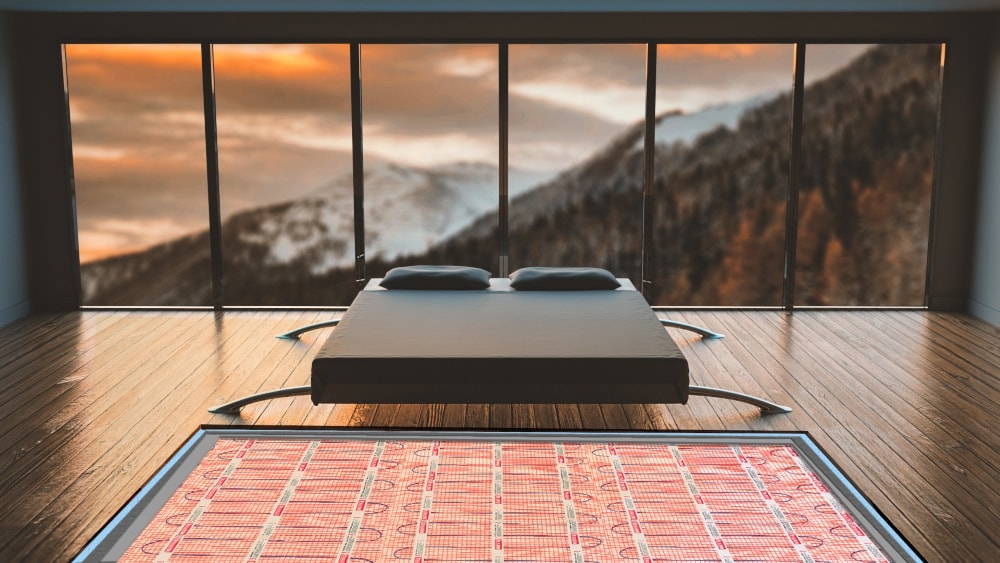
Find out what Warmup Underfloor Heating Systems can best meet your heating needs, whether you’re at home or not. Upgrade your heating system to enjoy energy savings and heating costs.
Contact us today, or get a free online quote. For more maintenance and installation tips, check out our YouTube channel.