
A garage provides a great space for storing things, such as cars and items that can’t be kept in the house. They are also a great space to convert into a workshop, gym, or warm playroom for kids during the colder seasons.
While the garage can be used for various reasons based on your preferences, an underfloor heating system would be ideal for keeping the space warm for maintenance and comfort purposes. In this article, you will find out:
- Why heating a garage is challenging
- What you can do to improve your garage heating
- How to choose a heating solution for your garage
- The best heating solution for your garage
- The benefits of radiant underfloor heating
The challenges of heating a garage
Garages are designed to provide an open storage space for larger items as opposed to efficiently retaining heat in the winter. Garages typically do not have insulation, which is meant to keep cold air from entering an area and cooling the concrete floor, or a heating source designed to maintain a consistent temperature in the area. A space heater, for example, would do little to improve your garage’s heating unless further adjustments were made.
How you can improve your garage heating
To first begin heating your garage, you will need to focus on improving its ability to heat up and retain heat. This will ensure that your garage operates more efficiently and keeps all the warmth in. There are several ways in which this can be done, such as by:
Insulating the space
The key to creating a warm space lies within a room’s insulation. To make your garage insulation successful, focus on insulating as much as possible, including all doors and windows. For the garage walls, this can be done using fiberglass, which is an effective and affordable option, or spray foam, which provides a more airtight seal yet is more expensive. Other options include purchasing rigid foam boards or a garage door insulation kit.
Removing pesky drafts
While insulation helps keep the heat in during the winter, removing drafts helps keep the cold air out. This includes sealing gaps in the garage that would allow cold air to seep through. You can spot draft locations by checking the perimeter of the garage. Keep a close eye out for areas such as:
- The garage door frame: There are usually small gaps around garage door edges. Weather strip seals are made to use on garage doors by preventing cold air from entering through these gaps.
- The bottom of the door: Check the seal or threshold of where your garage door meets the floor. Over time, the seals can begin to crumble and lose the ability to keep cold air out.
- Windows: Cold air may seep through windows as well, causing unpleasant drafts. Several cost-effective draft prevention options include caulk, sealant, and shrink wrap, which can be placed along the frame of the window to prevent drafts.
How to choose a heating solution
Insulating your garage is a great first step to making the necessary adjustments to heating your garage, though there are additional things that may need to be done to effectively keep it warm. Further heating options may include installing a permanent heating solution or finding a temporary one that can be placed elsewhere when it’s not in use.
6 Garage heating solutions
Adding a heating solution can ensure that your garage is heated to best meet your heating needs. Choosing between the various options depends on your budget needs and personal preferences. Several practical options include:
1. Space heaters
Perfect for temporary use, as they can be easily plugged in when needed and stored when not in use. You can choose from various kinds of space heaters, such as electric, combustion, ceramic, and infrared. Space heaters are ideally used for spot heating due to their small size and location-specific heating capabilities, and they should be used with caution as they can get hot or pose a potential fire hazard.
2. Convection Heaters
Convection heaters can work off electricity, natural gas, or propane. They work by circulating air convection currents through the heater and heating elements which heat the air within a given space. They come in many sizes, which allows you to choose one that would most effectively heat your space. Like space heaters, they may not be the best choice for larger spaces, and as they circulate air, they may not be the best choice for workshops or gyms due to the circulation of dust and debris.
3. Ductless heating and cooling
Ductless systems, also known as split systems, provide an energy-efficient, eco-friendly heating option for garages. They are easier to install than traditional HVAC systems, though they require a more significant upfront cost than options such as space heaters and convection heaters. Additionally, they require more maintenance, as the filter must be cleaned regularly to prevent debris from building up.
4. Forced-air system
A forced-air system operates by emitting hot air around the garage to create a warmer space. Compared to other options, they are more affordable and can be easily connected to already existing gas or propane lines within your home. It’s worth noting that forced-air systems are noisy and would spread dust and debris around a garage just as a convection heater would. Like a ductless heating and cooling system, they would also require regular maintenance like dust cleaning.
5. Stoves and fireplaces
A more traditional idea for a garage heater, stoves and fireplaces offer several types of heaters, such as wood and gas, as well as different kinds of factors to consider. Though both are effective heating options, they require maintenance for safety purposes and can be hazardous due to their high heating thresholds. That being said, they are a good choice, especially for garage workshops or gyms, as they don’t circulate any dust or debris within the space as other systems do.
6. Electric underfloor radiant heating
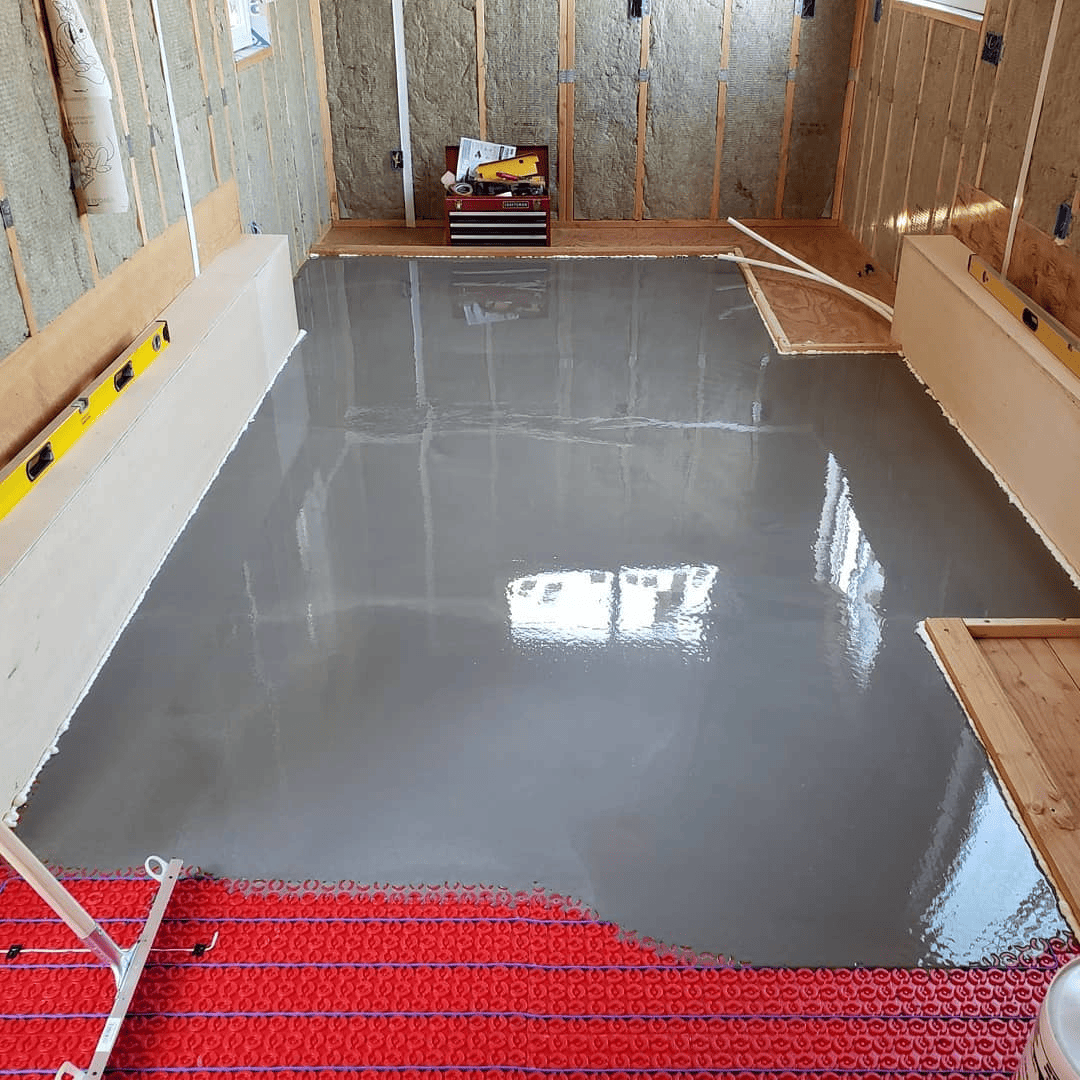
An overall easy-to-install, low-maintenance, affordable and effective heating solution, underfloor radiant heating is an ideal choice for heating a garage. An electric radiant heating system involves having heating cables laid under the flooring. These cables generate heat that moves from the floor up to warm the space evenly and consistently at lower temperatures than other heating systems. This strategic heating location and method efficiently uses energy, which can save you money on your energy bills every year.
Radiant heating in the garage
Radiant heating provides a highly effective heating solution that is long-term, permanent, consistent, even, and cost-effective. It can even add to the value of your home. These systems provide the best way to efficiently use underfloor heating to successfully heat your garage:
DCM-PRO Uncoupling System
The DCM-PRO System is a great option to use if you are renovating your garage but not redoing the entire subfloor slab. More specifically, if you are pouring an inch or less of concrete over the heating system, then the DCM-PRO is a great fit for your project. It is easy to install, as the membrane can simply be rolled out and the cable can be placed to best suit your desired wattage output. Pair the system with Ultralight 4-in-1 Insulation Boards to prevent heat from sinking into the ground and effectively direct heat upwards to heat your space.
WODH In-Slab System
The WODH In-Slab System is best suited for full-scale garage renovations that involve the complete reconstruction of your subfloor slab. When redoing the slab, the heating cable should be placed 2-4 inches away from the surface. The In-Slab heating system ensures that the slab remains at a consistently and evenly distributed warm temperature, meaning that heat won’t be unnecessarily absorbed by the cold floor and that your garage will retain heat more effectively.
Smart Thermostats
Smart Thermostats provide an excellent choice for managing your radiant heating system. Through multi-zone heating, you can establish your garage as its own zone. This provides the ability to control the garage’s individual temperature settings, allowing you to maintain both a comfortable lower limit temperature and schedule higher heating periods for when it is in use. Smart Thermostat management of multi-zone heating optimizes energy-efficiency and lowers heating bills, since the heat is always being used at the right temperature at the right time in ways that best meet your heating preferences.
The right way to heat a garage
Garages provide a helpful space that can be used for various reasons, though it’s important to keep it warm during the colder months so you can use and enjoy it just the same as in the warmer months. Though they are typically not designed to stay warm, there are steps you can take to ensure your garage stays warm, such as insulating the space and sealing any air gaps. That, however, is only part of solving the problem. The larger choice involves choosing an effective garage heating system. Electric underfloor radiant heating systems provide the most energy efficient heating system with the cleanest air delivery.
If you are looking to establish an effective, long-term heating solution for your garage, consider installing a Warmup radiant floor heater.
Get a free, instant quote today to find the best Warmup system for your requirements. For more maintenance and installation tips, check out our YouTube channel.