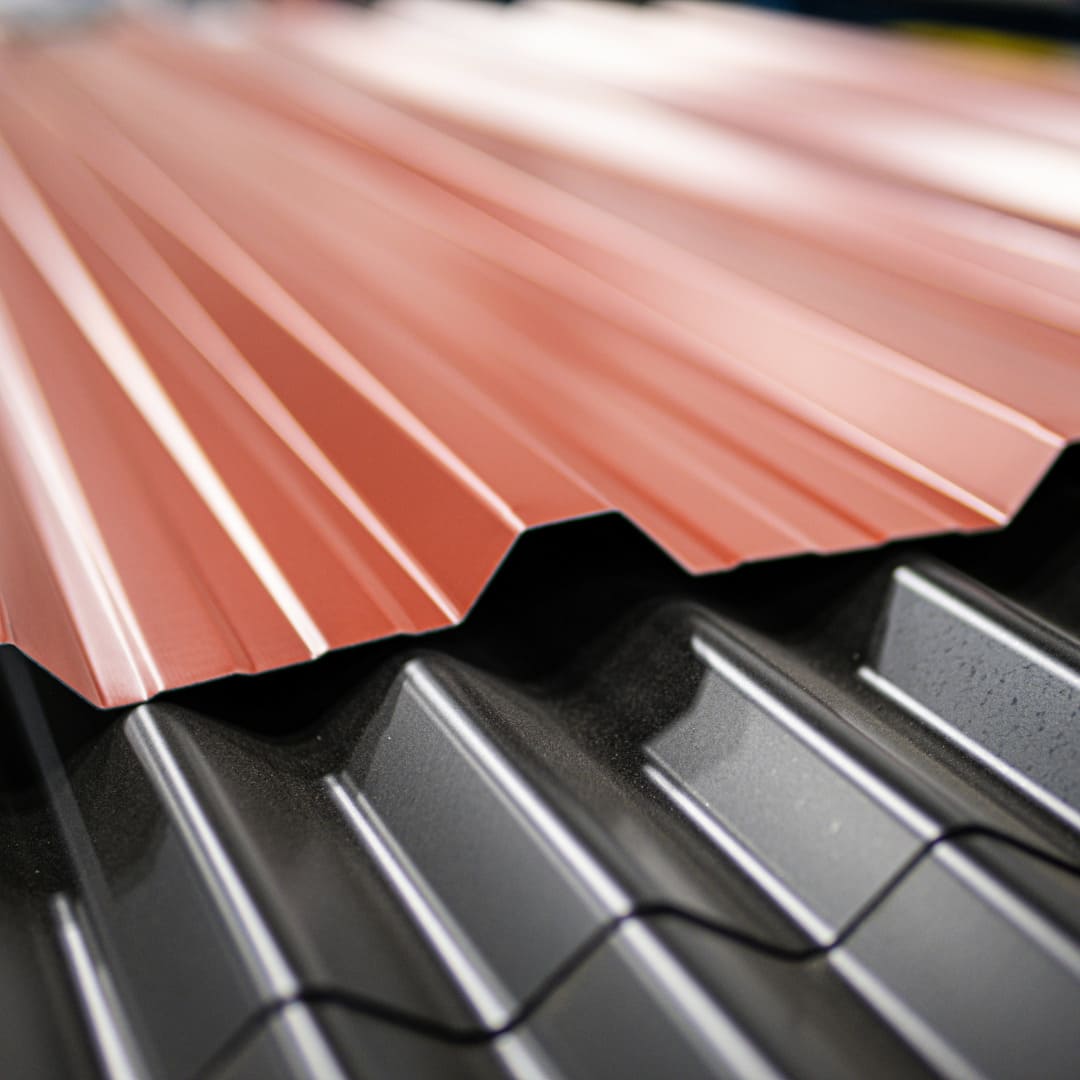
If you live in an area that experiences low temperatures, snowfall, and ice buildup, protecting your metal roof, such as through the use of electric radiant heating, could preserve its longevity and structural integrity. Metal roofs are known for their durability, but heavy snow and ice accumulation can stress the panels, seams, and gutters. By taking preventative measures with radiant heat, you can reduce ice dams, improve water drainage, and ensure your metal roof will be well-protected during the winter months.
In this article, you’ll learn more about why it’s important to protect your home’s metal roof, as well as:
- The types of roof damage that snow and ice can cause
- Why de-icing your roof is a good way to reduce and prevent damage
- What the possibilities of using heat tape as a de-icing method are
- What the benefits of using radiant heating cables to prevent ice buildup are
The importance of de-icing a metal roof
Ice buildup can pose a hazardous threat to your home as well as the surrounding area, leading to significant damage to your home and possible personal injury by ice falling off the roof at unexpected times. Metal roof heat tape and heating cables can be used to mitigate many of the concerns caused by ice buildup.
Home damage
Damming ice happens when ice builds up in areas across the roof, which can be harmful to your roof and home. Ice damming prevents the drainage of melted snow and ice by blocking their pathways off the roof and instead causing the potential for water to seep through vulnerable spots in your roof’s eaves and valleys. Water penetration can lead to detrimental consequences, such as mold, rot, and structural damage.
Additionally, ice can accumulate within your home’s gutters and downspouts throughout the winter. As ice continues to build up, it becomes significantly heavier and can reach a weight higher than what gutters and downspouts can structurally support. This increasing amount of ice causes excessive strain on your gutters and downspouts, causing them to reach a breaking point and detach from your house.
Using heat tape or heating cables for metal roofing, downspouts, and gutters significantly reduces ice dams if not eliminating them entirely, as they ensure a proper pathway for drainage. This damage preventive strategy is a cost-effective one, due to the cost of installing heat tape being significantly lower than the cost of home repairs after ice and snow-related deterioration has already taken place.
Safety concerns
As ice and snow accumulate along and on top of the roof, the risk of injury due to falling ice and snow increases. Ice accumulation can be hazardous, as it encompasses the roof’s entire perimeter and endangers those who pass beneath it. Icicles form under the roofline, meaning that if they fall, they can cause damage to both people and property below.
When snow and ice fall off a metal roof, it causes a loud sound and an avalanche-like falling effect. If someone is caught in the fall zone, they could experience serious bodily harm.
Metal roof heat tape and heating cables effectively remove ice buildup and keep roof drainage open, which results in the accumulation of much smaller amounts of snow and ice (if any at all) on the roof. Similarly, this significantly reduces the potential for snow and ice to fall from the roof or cause the corresponding dangers associated with it.
The difference between using heat tape and heating cables to de-ice a metal roof
The best way to de-ice a metal roof is by using heat tape or heating cables. Both heat tape and heating cables are specially designed to effectively melt snow and ice off metal roofs to prevent ice and snow from accumulating on top.
Though they do perform similar functions, there are some noteworthy differences between these two metal roof de-icing methods:
Heat tape
- Due to its flexibility, heat tape can be easily adjusted into different shapes and be used to fit around irregularly shaped areas.
- Heat tape is sold in predetermined lengths ranging from 2’ to 100’, and as such, cannot be cut to fit custom sizes.
- It is possible for heat tape to overheat – if there is a section of the tape that has both sides exposed to open air, the tape will not be able to transfer heat beyond that point and will proceed to overheat and break down instead.
Heating cables
- Though less flexible than heat tape, heating cables are pliable and can be used on metal roof surfaces regardless of their shape.
- Heating cables can be cut to fit custom-sized lengths.
- Heating cables do not overheat, as they are capable of self-regulating their temperature.
- Heating cables can be plugged into any outdoor GFCI-protected outlet or controlled automatically through a dedicated controller.
Installing heat tape and heating cables
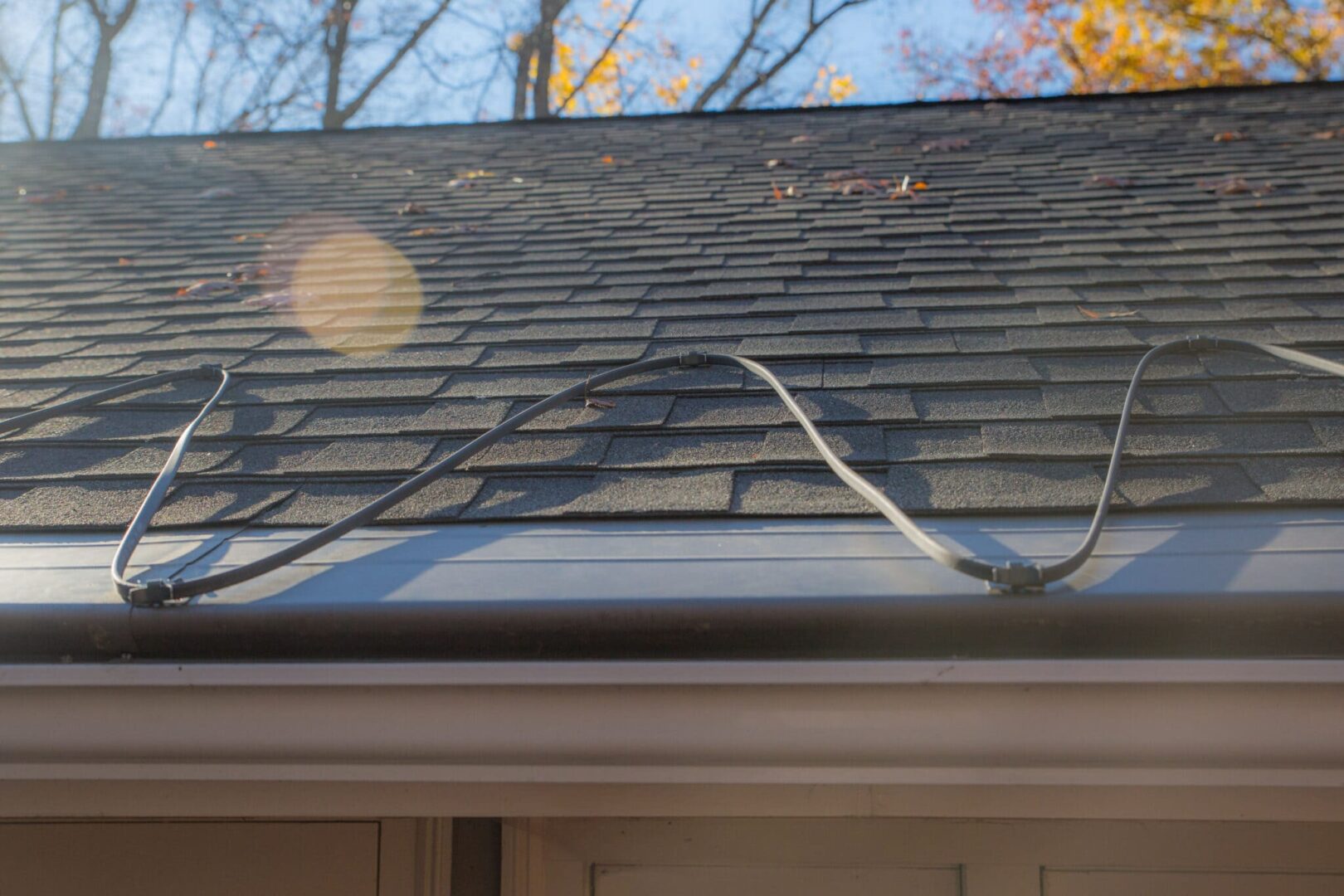
To install both heat tape and heating cables onto a metal roof, you will need to create a triangular, up and down zig-zagging pattern from the gutter to about 12-24″ from the roof’s edge, depending on the size of the roof overhang.
Valleys are the most vulnerable part of your roof to snow and ice buildup. Running heat tape or heating cables about 3’ to 4’ into the valleys provides the depth necessary to effectively protect them by keeping drainage pathways open.
Want to learn how heating cables are installed on a roof? Watch our installation video here.
Managing heat tape and heating cables after installation
Since heat tape cannot self-regulate like heating cables can, you must use a controller to regulate its temperature.
Heating cables such as Warmup’s, on the other hand, are self-regulating, meaning that they will automatically adjust their heating output depending on temperature changes – the colder the ambient temperature, the warmer the cable will be. To do so, they only need to be plugged into any GFCI-protected outdoor outlet. This makes for an effortlessly managed, energy-efficient de-icing system, as it only uses the necessary amount of energy when it is needed. This makes for an effortlessly managed, energy-efficient de-icing system, as it only uses the necessary amount of energy when it is needed.
The Self-Regulating Heating Cable De-Icing System can be optimized even further when paired with an automatic controller and sensing device. Warmup’s controllers can be specially tailored to suit your individual heating preferences, and the sensing device can be used to most accurately detect moisture in the air. When these accessories are paired with the heating cable, the de-icing system reaches a seamless combination of personalization, weather detection, and efficient energy usage.
The cost of heat tape and heating cables
The cost of metal roof heating cables varies depending on the length, application, and chosen controller.
The cost of heating cables, such as Warmup’s Self-Regulating Heating Cable, also depends on the size of the project. The price for Warmup’s heating cables, however, begins at $100. When compared to the potential cost of roof or house repairs due to snow and ice damage, using heating cables is a far more cost-effective option due to its efficiency, longevity, and roof protection capabilities.
The best choice: Warmup’s Self-Regulating Heating Cables
Warmup’s Self-Regulating Heating Cables effortlessly protect your metal roof, home, and loved ones from damage caused by snow and ice buildup.
The Self-Regulating Heating Cable works by automatically adjusting its power output to compensate for changes in the temperature. This temperature-detection feature ensures that its heat output adjusts as needed to most effectively protect the roof against snow and ice damage. The wires within the cable contract more as the temperature lowers, which increases its power output, and conversely expands in warmer weather, which lowers its heat output.
In comparison to heat tape, the Self-Regulating Cable eliminates a key step in terms of de-icing system control, as they adjust their heat output and energy usage on their own whereas heat tape must be managed manually through a controller. This key capability helps homeowners save on heating costs during the cold months and removes the hassle of making frequent adjustments to their de-icing system.
Ultimately, Warmup’s Self-Regulating Cable provides the best option for energy and heat optimization and requires little to no maintenance once installed, ensuring system longevity and peace of mind for roof and home protection from snow and ice damage.
Contact us today or visit our website to learn more about outdoor radiant heating solutions for driveways, pipe freeze protection, and more in addition to all of our other product ranges.
Get a free, instant quote today to find the best Warmup system for your project requirements. For more maintenance and installation tips, check out our YouTube channel.