Building your dream home or working on a larger, new-build commercial or residential development? An underfloor heating system may be the perfect heating solution for you. In this guide, we’ll walk you through the many benefits of floor heating for construction projects, exploring which system will be best for your needs. You’ll find out:
- What makes radiant heating so good for construction projects
- The best system to use with concrete screeded floors
- Which floor heating systems offer a dry installation method
- The benefits of a hybrid heating solution for new-build properties
What are the Benefits of Floor Heating for a New Build?
One of the best things about building from the ground-up is that you can really consider how the space will work for your needs in the long-term, including its method of heating. Choosing the right heating solution for new-build projects is a crucial decision and should be made as early in the design process as possible.
Electric floor heating is a cleaner, more sustainable heating method than traditional heating options and is perfect to use as a primary or secondary heat source in well-insulated construction projects. Floor heating means you can design your dream home without being restricted by a central heating system’s wall-mounted radiators and visible pipework or a forced air system’s bulky ducts. And, alongside this enhanced feeling of space, you can also enjoy the enhanced efficiency of UFH too: floor heating uses less energy to reach ideal comfort temperatures than traditional heating options whilst producing the same level of comfort. This kind of energy-saving technology can also result in big savings on your utility bills too.
Looking for some inspiration for your upcoming construction project? Check out our Case Studies to see how Warmup have brought radiant warmth to an array of developments across the country.
Which Floor Heating System is Best for Concrete Subfloors?
When specifying radiant heating for a construction project, you can take the size and installation requirements of your selected system into account as part of its architectural blueprints – working out the property’s ideal heating zones and setting its ceiling heights in relation to the system.
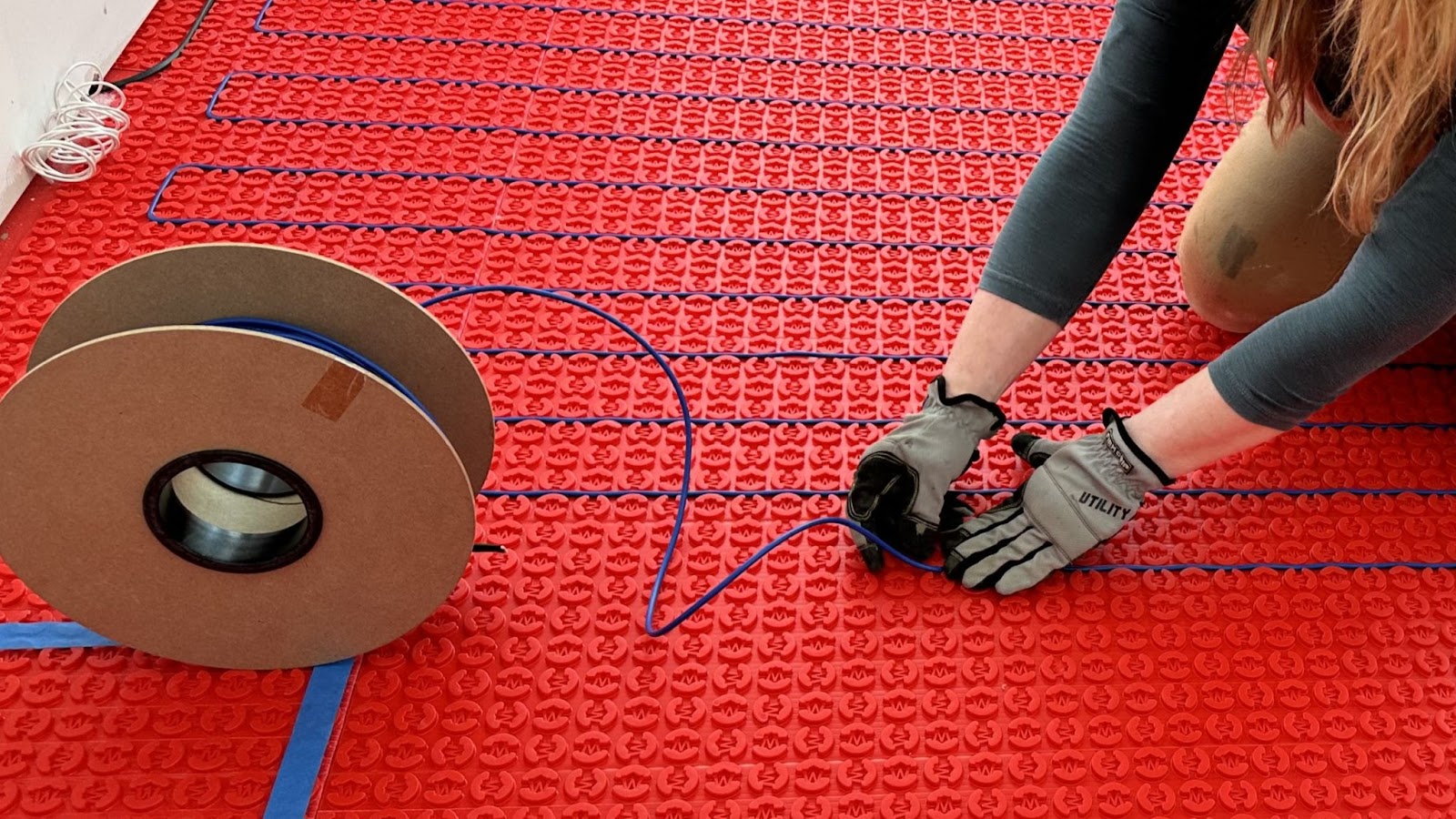
Screeded concrete is the most common choice for subfloors in construction projects, offering a strong foundation for every room in a property. Warmup’s In Slab-Cable System has been specifically designed for installation within screeds of 50mm – 100mm and as such, can be fitted as part of the fabrication of the building. The slower heat-up and cool-down times of this system makes it suitable for rooms in constant use, as the screed can be used as a form of storage heater.
Which Radiant Heating Systems are Suitable for Non-Screeded Floors?
The DCM-PRO Heated Uncoupling System is ideal for use with tiled floors in the bathrooms and kitchen of a new-build property as its uncoupling attributes can prevent potential damage caused by lateral subfloor movement. DCM-PRO is available with two membrane options: its Peel-and-Stick Membrane features a self-adhesive backing for rapid installation times onto your project’s subfloors whilst the Fleeced-Backed Membrane can be used with a wide range of thinsets.
The Foil Heater, meanwhile, offers a ‘dry’ installation method for construction projects, with no need for adhesive, screed or levelling compound. Its heating wires are contained within a reinforced aluminum foil matting that acts as a continuous earth layer, facilitating a consistent and even heat distribution and it has been engineered for use with floating floor finishes such as laminate, vinyl and carpet.
Want to find the best Warmup system for your needs? Get a free instant quote today.

Can You Use More Than One Type of Heating System in a Construction Project?
Electric underfloor heating is perfect to use as a secondary heating solution in just one or two rooms of a new home alongside another heating system. Heated floors used in conjunction with central heating for instance, can work especially well for larger new-build projects with more complex requirements. Interested in finding out more about the benefits of this kind of hybrid heating solution? Read our article on the differences between radiators and heated floors to discover everything you need to know.
All floor heating systems require the use of dedicated heating controls to provide accurate, zoned heat control – meaning that if you are considering a hybrid heating solution, you can rest assured that the two systems can be controlled independently to one another.
And did you know that you can also install an outdoor heating solution to work alongside a property’s indoor heating? If you’re building your dream home, Warmup’s range of outdoor heating systems will ensure that sure your driveway and roof will remain frost-free throughout the winter months.